From placement to market

Broiler chicken farming guide

A strong cycle is not one perfect number. It is a chain of timely checks: prepared housing, immediate feed and water, measured growth, dry litter, controlled heat, clean records and a sale planned before the birds are ready.

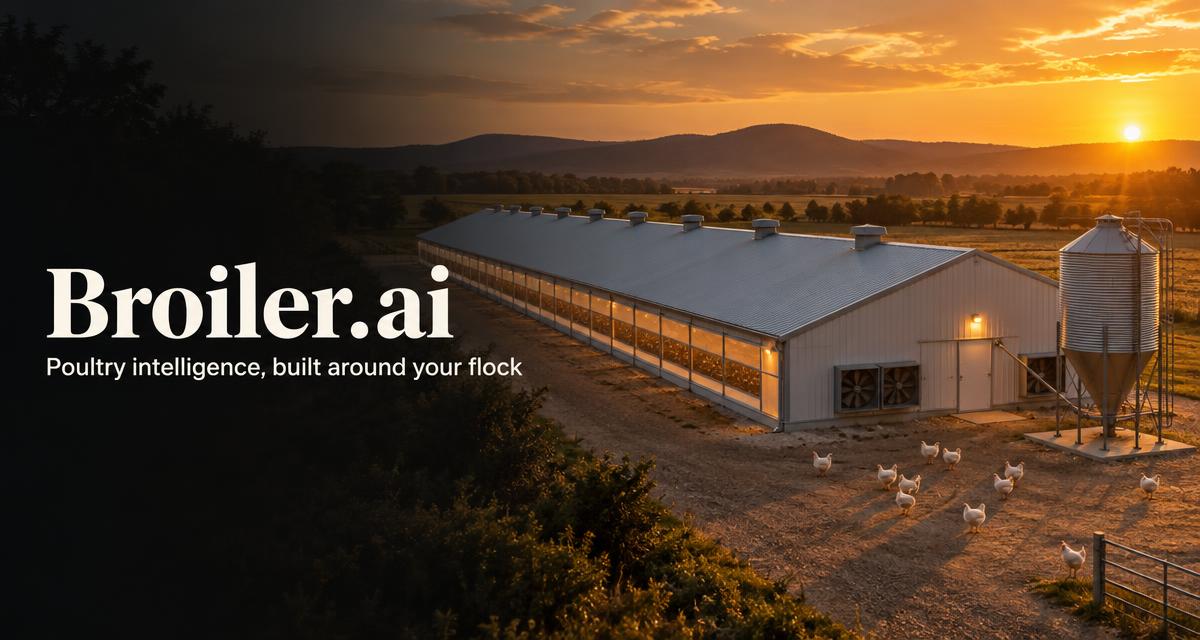
Broiler.ai poultry intelligence inside a modern broiler house

Measure the flock

Weekly weight, feed use and survival reveal drift early enough to act.

Manage the environment

Temperature, air speed, water and litter interact; manage them as one system.

Know the economics

Use your real chick, feed and sale prices before committing to a placement.

The operating sequence

Four stages that shape the result

01 · Before placement

Prepare the house, water and records

Clean and dry the house, test every drinker and heat source, secure feed, confirm the chick source, and write down the numbers that define success: birds placed, target market age, target weight and expected losses.

02 · Days 0–7

Win the first week

Judge brooding by chick behaviour as well as temperature. Birds should spread evenly, find feed and water quickly, and show strong crop fill. Record daily deaths and investigate a rising pattern rather than waiting for the weekly total.

03 · Weeks 2–4

Measure growth and protect the litter

Weigh a representative sample each week. Compare average live weight with the relevant breed curve, track cumulative feed, repair leaks immediately and keep air moving at bird level as body heat and moisture rise.

04 · Weeks 5–market

Manage density, heat and the sale

Heavier birds produce more heat and reduce the safe headcount per square metre. Confirm local density and withdrawal rules, line up transport or processing, and recalculate margin with the price you can actually receive.

Breed performance

Use a breed curve as a reference, not a promise

Broiler.ai carries four baseline growth profiles. Housing and climate can reduce expected performance, so weekly weighing matters more than waiting for the final market age.

BreedReference ageTarget weightBaseline FCRWeek 4 weight
Ross 30842 days2.80 kg1.552.27 kg
Cobb 50042 days2.75 kg1.572.23 kg
Cornish Cross49 days2.60 kg1.722.08 kg
Local dual-purpose84 days1.80 kg2.400.90 kg

Housing decisions

Match investment to climate, scale and control

Pasture / mobile tractor

Ventilation
Open air
Planning density
5/m²
Cycles/year
5
Heat tolerance
medium

Deep litter, naturally ventilated

Ventilation
Natural
Planning density
10/m²
Cycles/year
5.5
Heat tolerance
low

Open-sided curtain house

Ventilation
Natural + curtains
Planning density
12/m²
Cycles/year
6
Heat tolerance
medium

Environmentally controlled tunnel

Ventilation
Tunnel, automated
Planning density
16/m²
Cycles/year
6.5
Heat tolerance
high

These are planning assumptions, not legal stocking limits. Confirm density, welfare, medicines, transport, slaughter and disease-reporting obligations with the authority responsible where you operate.

Turn the guide into your flock plan

Tell Broiler.ai your region, housing, breed and bird count. The growth curve, floor area, feed estimate and economics update around those assumptions.

Open the planning canvas

Field guidance only. Sudden deaths, respiratory signs, severe diarrhoea or suspected notifiable disease require a veterinarian or local animal-health authority.