
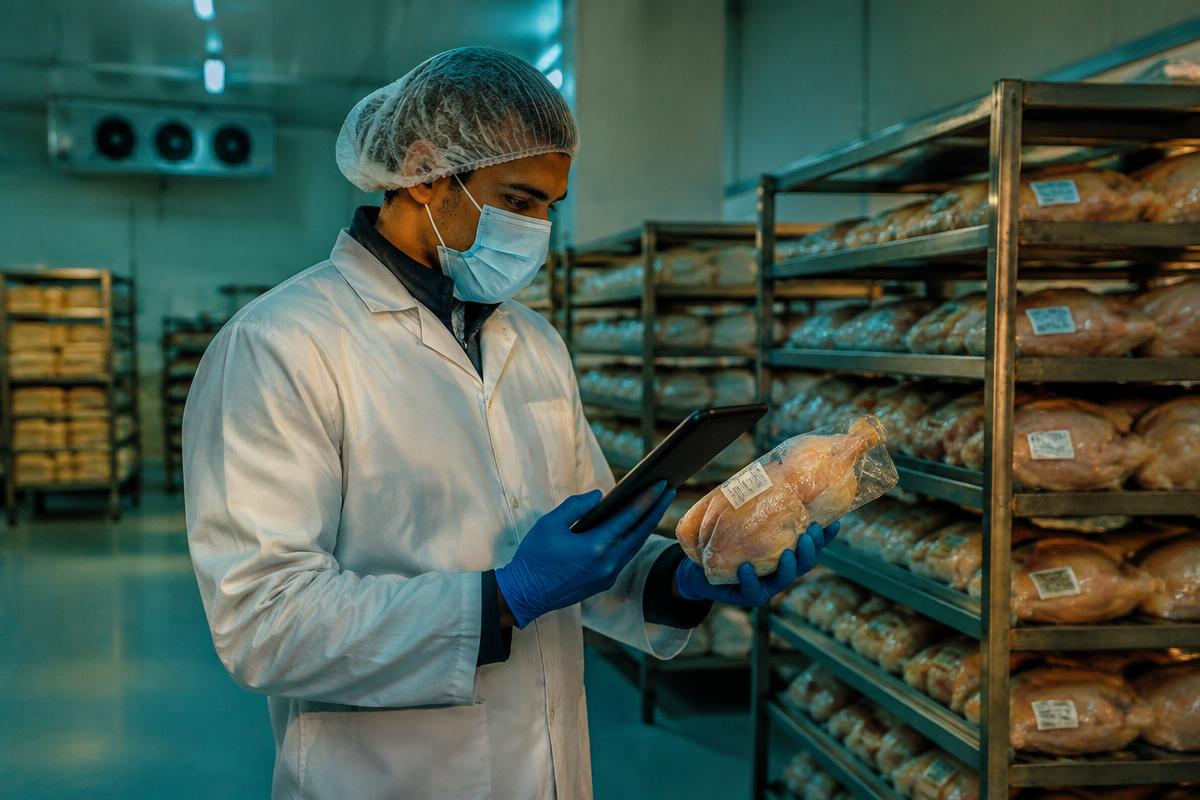
A code on a pack is not traceability by itself. The chain has to connect a finished product back through processing, flock, feed and medicine records—and forward to the customers who received it.
Field principle
Test the system with a mock recall: choose one lot and measure how long it takes to find every input and every destination.
Capture fewer things reliably
Start with identifiers that survive hand-offs: farm, house, placement, catch, processing lot, product lot and dispatch. Add timestamps and responsible people. A short chain completed every time is stronger than a sophisticated form with gaps.
Medicine and withdrawal records deserve special care. The rules and retention periods vary by jurisdiction, processor and assurance scheme; confirm them with the authority and buyer that bind the operation.
Make correction possible
Records should support quarantine, recall and root-cause work without exposing personal farm data to the public. Decide who can read, amend and export each layer, and keep an audit trail for changes.
Consumer-facing transparency can be valuable, but it should present verified facts rather than an ornamental technology claim. The promise is confidence in origin and handling, not the database underneath it.