
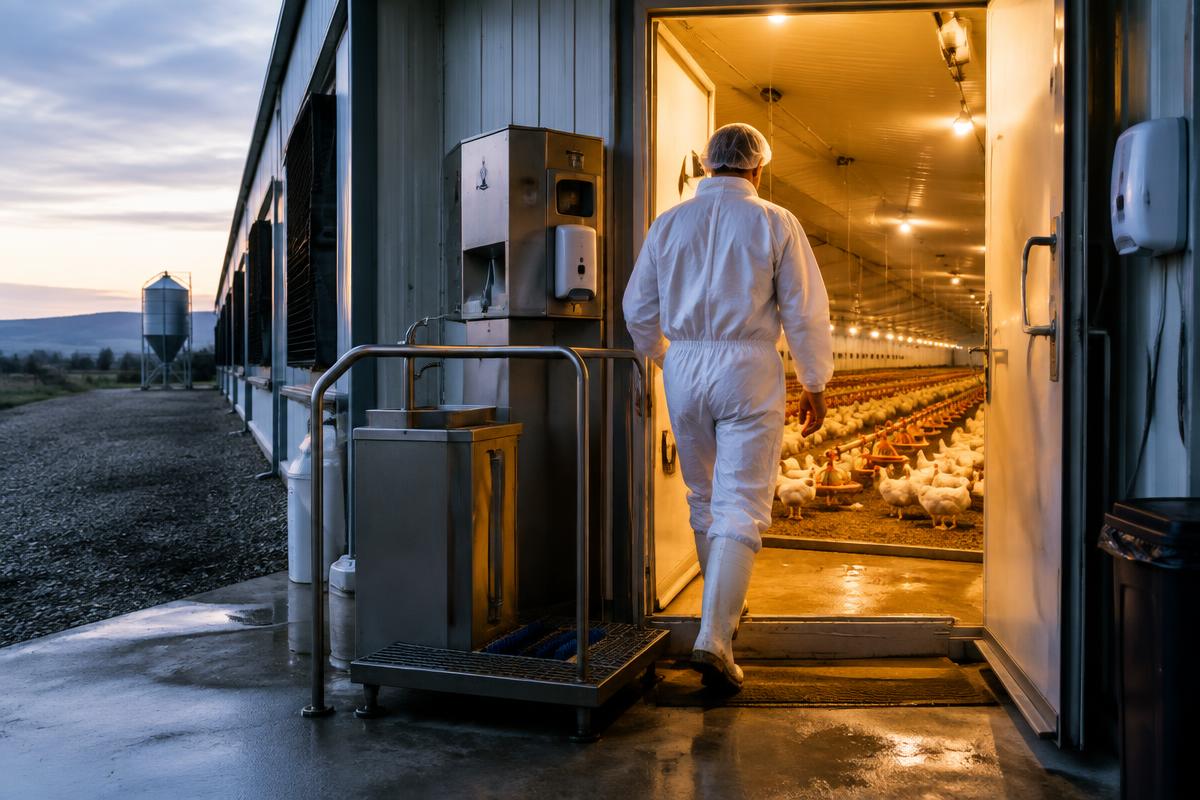
Biosecurity fails at the hand-offs: a boot crosses the line, a crate returns uncleaned, a visitor enters two sites in the wrong order. The strongest programme makes the safe route obvious and the unsafe route inconvenient.
Field principle
Draw the farm as movements, not buildings: people, birds, feed, vehicles, equipment, pests and waste each need a controlled path.
Design the clean line
Mark where outside clothing, footwear and equipment stop. Provide a sequence that can be followed when people are rushed, wet or carrying tools. A physical barrier, dedicated house boots and visible hand-cleaning point are easier to audit than a written instruction alone.
Visit younger or higher-health flocks before older or suspect flocks. Define downtime between farms with your veterinarian and local programme; a universal interval should not be guessed because disease pressure and official requirements differ.
Close the return loops
Catching equipment, modules, egg trays, tools and maintenance vehicles can reconnect houses that looked separate on paper. Cleaning must include removal of organic matter before disinfection, followed by the correct concentration and contact time for the product in use.
Keep a simple entry and cleaning record. It is evidence during an investigation, but more importantly it reveals recurring breaches while they can still be corrected.