
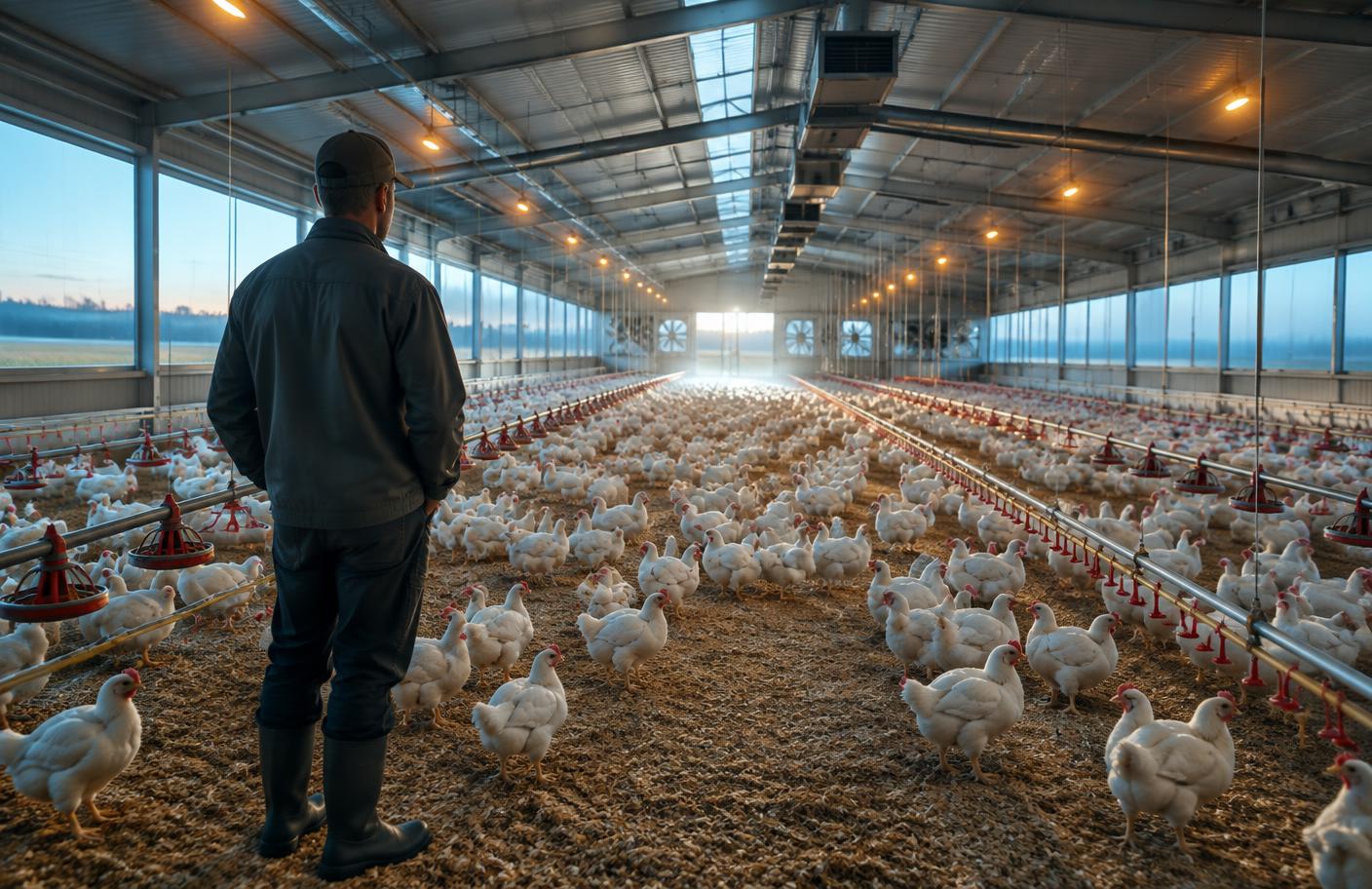
A good stockperson rarely waits for a dashboard to declare a problem. Distribution, sound, water use, litter and the way birds rise when someone enters the house already form a living instrument panel. Digital monitoring is most valuable when it sharpens that reading rather than replacing it.
Field principle
A signal is useful only when it changes the next inspection. Treat alerts as prompts to look, listen and measure—not as diagnoses.
Begin with the normal pattern
Early warning depends on a baseline. Record what an evenly settled flock sounds like at the same times each day, how quickly drinker lines are occupied after lights come on, and where birds choose to rest. A change from that farm's own pattern may matter before a generic threshold is crossed.
Water intake, feed disappearance and temperature are stronger together than alone. A warmer day can explain higher water use; a quiet house with falling water use deserves a physical check. Context keeps ordinary variation from becoming a false alarm.
Sensors should narrow the search
Environmental probes, scales and cameras can show where to walk first. They do not tell you why birds changed. Check equipment, air quality, litter, feed access and the birds themselves, then record what you found so the next alert carries more meaning.
Any pattern involving severe breathing difficulty, sudden mortality, neurological signs or a rapid flock-wide change belongs with a veterinarian or the relevant animal-health authority. Speed matters more than certainty.