
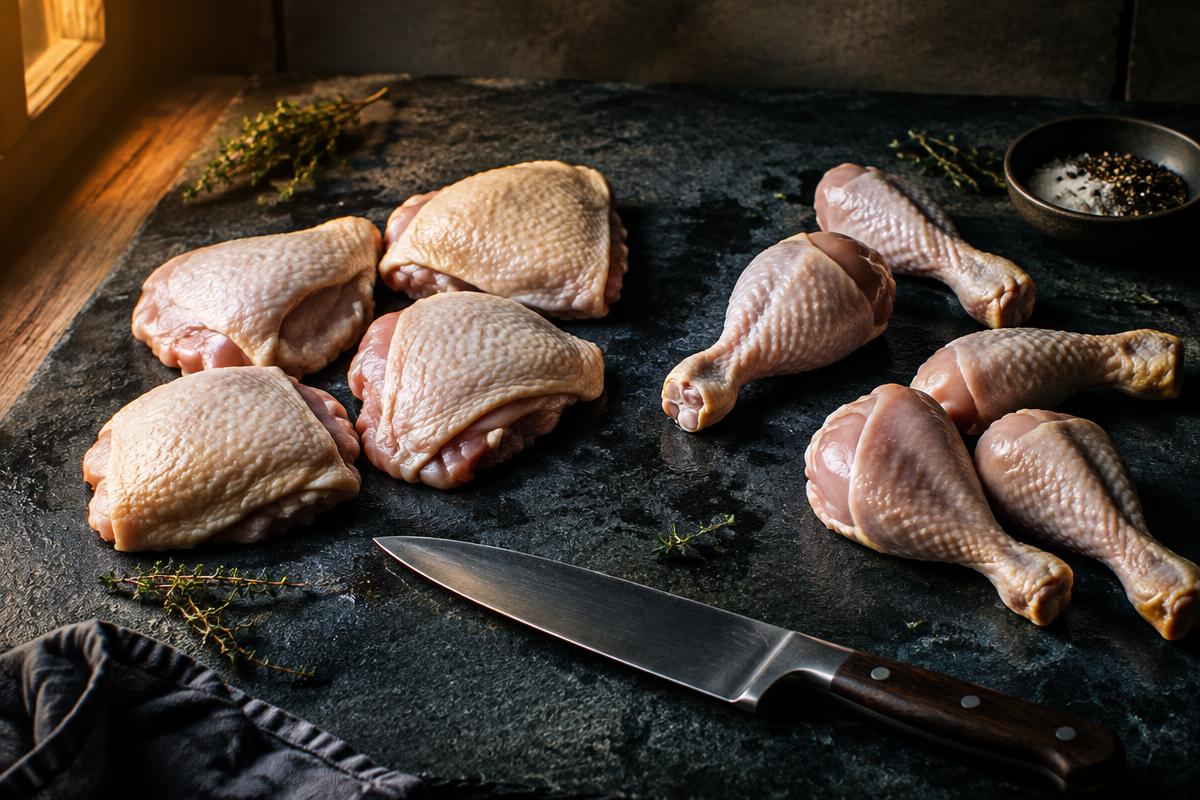
A broiler is sold as a whole biological system but priced as a collection of products. Breast, leg quarters, wings, frames, skin, giblets and fat each meet a different buyer, cuisine and margin.
Field principle
Yield is not value. Track saleable kilograms by cut, the realised price of each, and the labour and packaging needed to reach that price.
Build demand around the carcass
Markets that strongly reward one cut can leave the processor with a balancing problem elsewhere. Food-service formats, marinated products, family packs and regional cooking traditions can turn that imbalance into demand.
Dark meat tolerates longer cooking and carries flavour differently from breast. Those qualities are commercial attributes, not secondary uses. Product development should start with how customers cook, not with a hierarchy imported from another market.
Measure what leaves the room
Live-to-dressed yield is only the first conversion. Record chill loss, trim, downgraded product and pack-out by cut. A high headline yield can coexist with weak realised revenue if the mix does not match demand.
Use current local quotations before making a processing decision. Broiler.ai's regional figures are planning references and should never replace the buyer's specification and price sheet.