
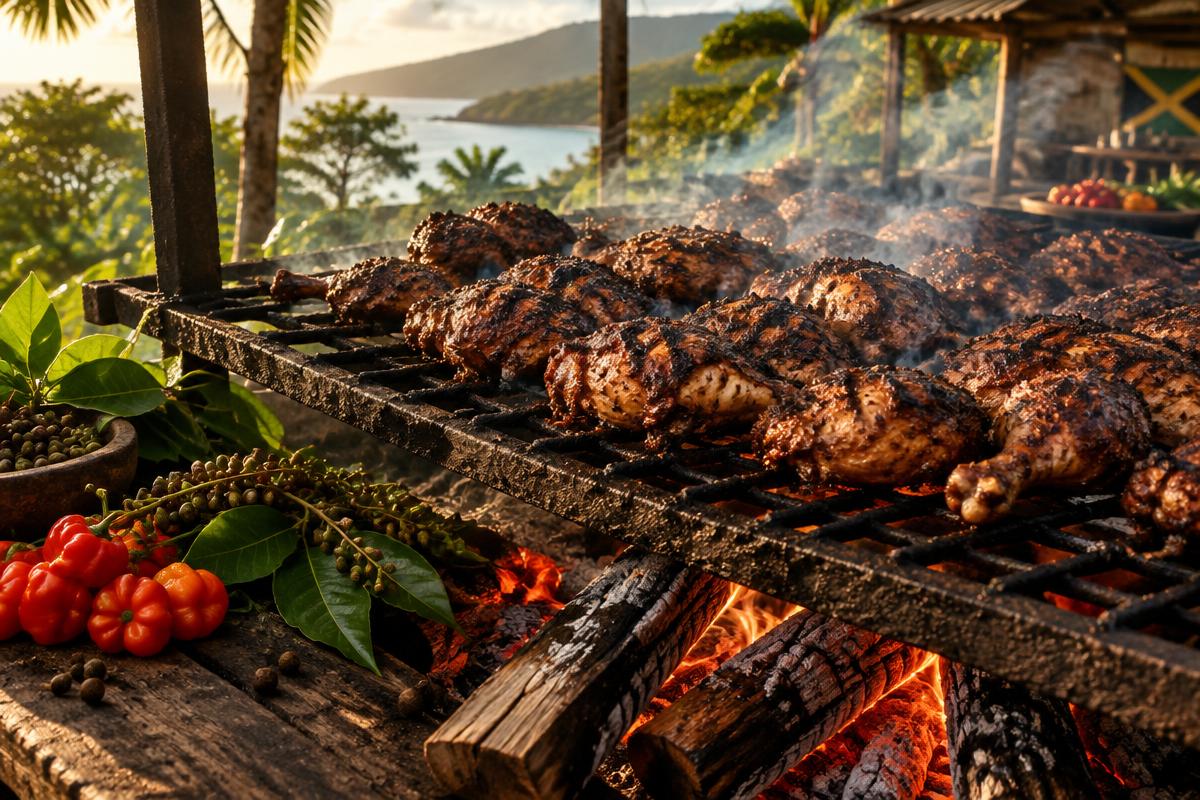
Jamaican jerk offers a precise example of place shaping technique. Allspice, thyme, scallion and chile matter, but so do the character of the smoke, the distance from the fire and the patience to cook through without burning the paste.
Field principle
Treat Jamaica here as one deeply specific regional example—not shorthand for global poultry cooking, and not a decorative flavour label.
Build flavour in layers
The seasoning paste contributes aromatics, salt and surface moisture. Pimento wood and leaves add a distinct smoke character where they are traditionally and legally available. Elsewhere, cooks should name substitutions honestly rather than claim an exact result.
Manage the fire so smoke stays clean and the exterior does not blacken before the centre is safe. Bone-in leg meat suits the method because connective tissue benefits from time, while smaller pieces demand closer control.
Keep tradition and safety together
Raw poultry preparation still requires separation from ready-to-eat food, clean tools and verified doneness. Outdoor cooking makes handwashing, cold holding and thermometer access more important, not less.
The broader lesson travels: regional techniques are systems of ingredients, fuel, equipment and judgement. Respecting them means understanding the system instead of reducing it to a spice list.