
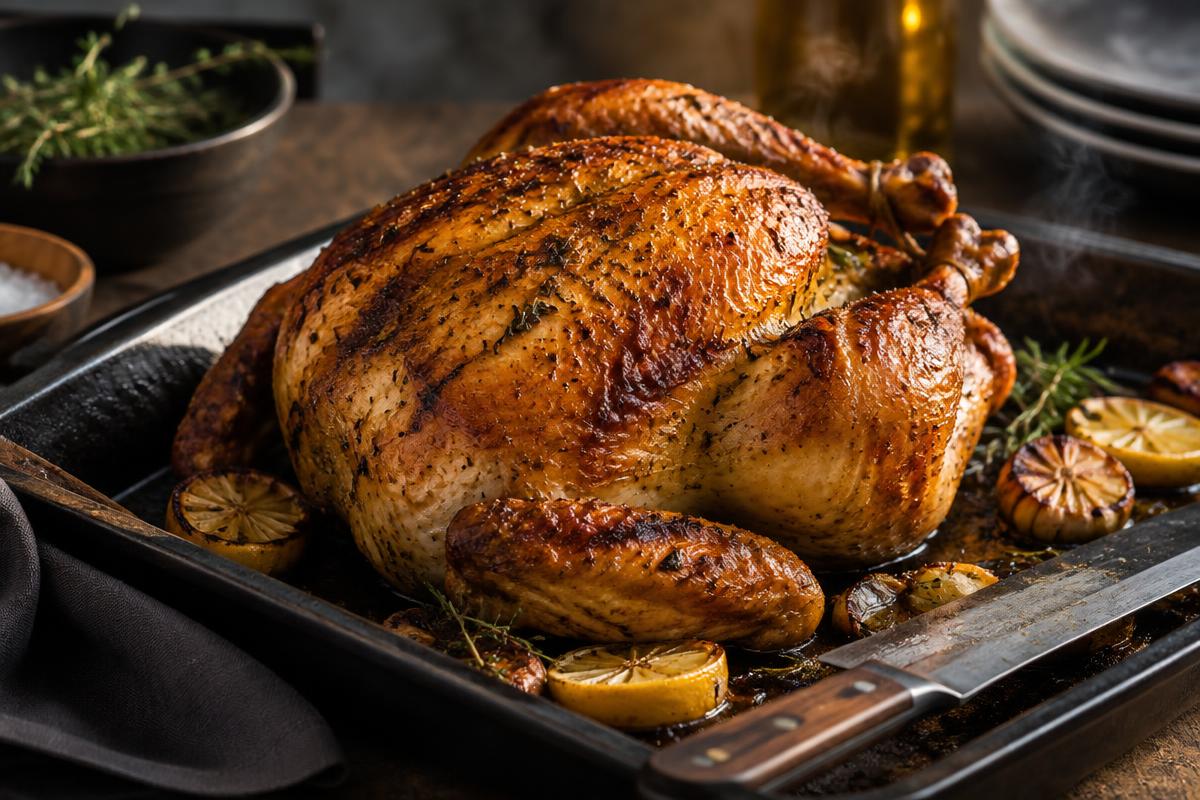
Roast chicken becomes easier when colour, tenderness and safety stop being treated as the same signal. Browning happens at the surface; doneness must be checked in the slowest-heating part of the bird.
Field principle
Use the safe endpoint required by your local food authority. Colour and clear juices are not reliable substitutes for a correctly placed thermometer.
Dry the surface, manage the centre
Surface moisture must evaporate before skin browns efficiently. Patting the bird dry, leaving space around it and using moving hot air all help. A dark tray can increase heat at the underside; a crowded pan traps steam.
Probe the thickest breast and the inner thigh without touching bone. Different authorities express safe time-and-temperature combinations differently, so follow the guidance where you cook or sell food rather than relying on a universal slogan.
Resting is part of the cook
Heat continues moving after the bird leaves the oven. Resting also slows the escape of juices when carving. The exact carryover depends on bird size, oven temperature and how it is trussed, which is why measurement beats a fixed timetable.
For service, separate raw and ready-to-eat tools and surfaces. Refrigerate leftovers promptly under local food-safety guidance; a beautiful roast is not an excuse to relax the cold chain.