
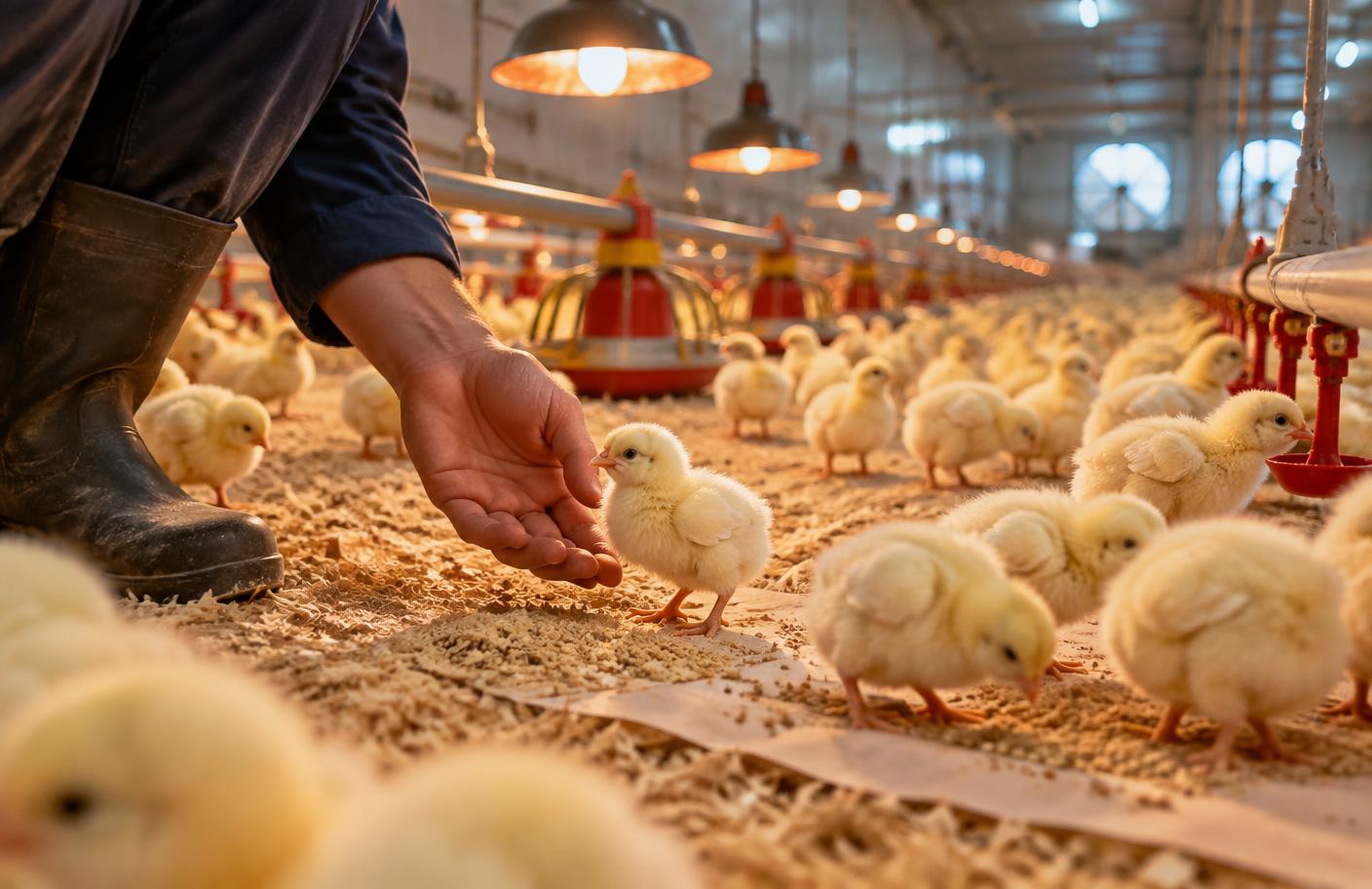
It is tempting to judge a delivery as good or bad from the first box opened. Chick quality matters, but what appears at placement is the combined result of breeder flock, egg handling, incubation, hatch window, processing, transport and the receiving house. The useful question is not who to blame. It is what the flock needs now, and what evidence should travel back through the chain.
Field principle
Prepare the environment before the vehicle arrives, assess a representative sample, and follow chick behaviour after release. Placement is a process, not a photograph.
Make readiness measurable
Preheat early enough for the floor and litter—not only the air—to reach the farm's approved placement range. Check temperature across the brooding area, confirm drinker function and line height, place feed where chicks can find it immediately, and remove draughts at bird level without sacrificing required fresh air.
Water temperature and quality, feed availability, light, litter condition and equipment spacing should be verified before unloading. Once chicks arrive, delays become biological time: they cannot be recovered by a better checklist completed afterwards.
Sample without over-reading
Observe a representative spread of boxes and positions in the vehicle. Record counts, obvious injuries, navel condition, alertness, leg condition, uniformity and any unusual contamination or dehydration signs using the hatchery or veterinary protocol that applies. One conspicuous chick should not define the shipment, and a good average should not hide a concentrated problem.
Keep delivery records, box positions, times and photographs where permitted. Specific evidence allows the hatchery, transporter and farm to compare patterns across placements rather than argue from memory.
Let behaviour test the setup
After release, chicks should distribute according to comfort and find feed and water promptly. Clustering, persistent loud calling, avoidance of an area or uneven crop fill are reasons to inspect temperature, draughts, light, equipment access and the placement sequence. Correct the environment before assuming the birds are the problem.
Crop-fill checks and early mortality review should follow the farm's approved programme and be interpreted with a veterinarian or technical adviser. Marked weakness, deformity, respiratory difficulty or an unusual mortality pattern requires prompt professional escalation and clear communication back through the supply chain.