
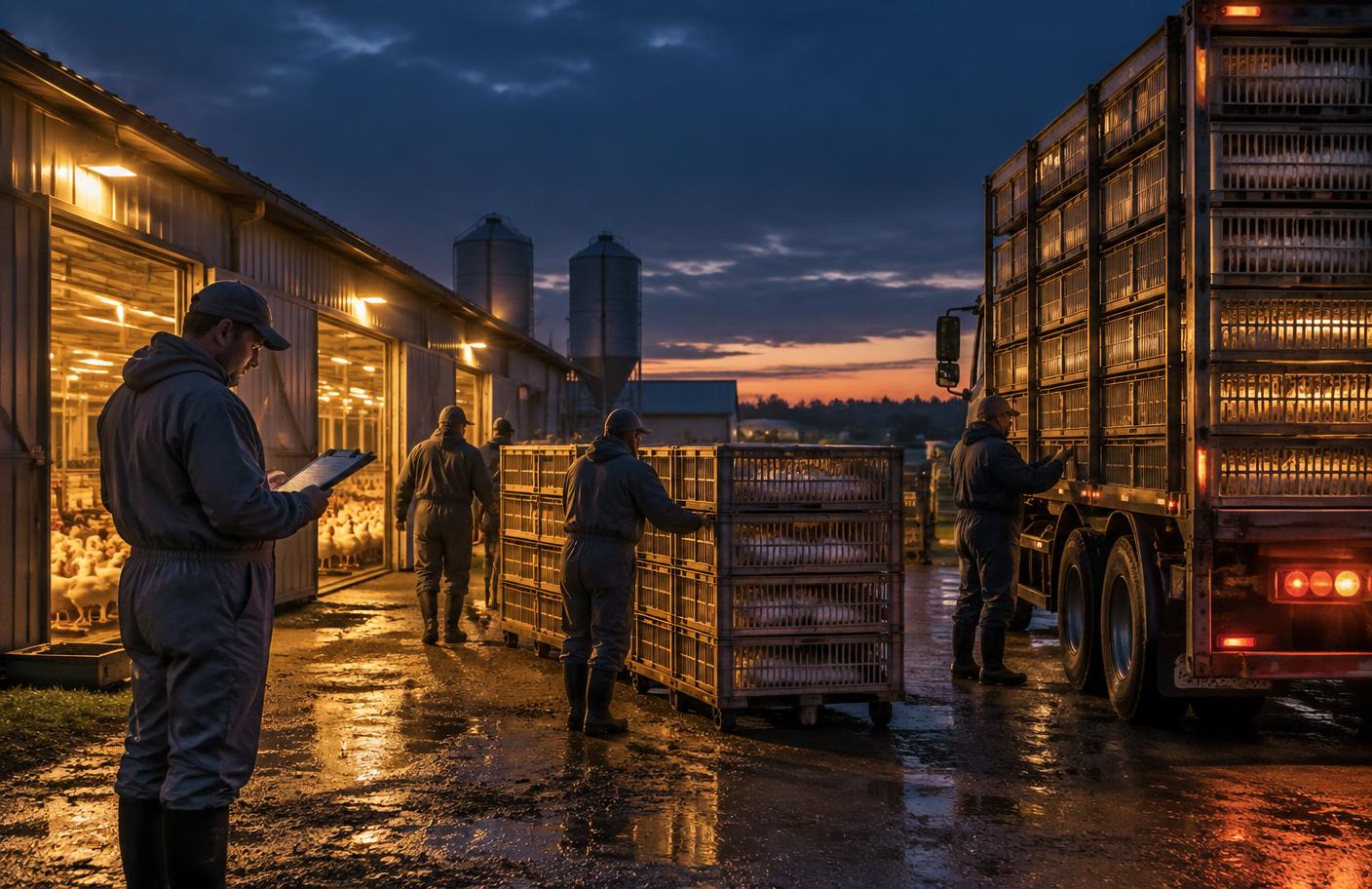
The final night can undo careful work quietly. A delayed vehicle extends feed withdrawal, a blocked module changes airflow, or a rushed catching crew turns a calm flock into a welfare and quality problem. The solution is not speed alone. It is a shared plan in which farm, catching team, transporter and processor work from the same clock.
Field principle
Work backwards from the confirmed processing slot, then give every hand-off an owner, a check and a trigger for stopping when conditions move outside the plan.
Build one operational clock
Confirm the processor's arrival requirement, expected catching duration, loading sequence and journey time before feed withdrawal begins. Withdrawal windows and welfare rules vary by jurisdiction, assurance programme and processor; use the instruction that actually governs the flock rather than a generic interval.
Keep water available for as long as the approved process permits and design the catching sequence so access is not removed prematurely. A late vehicle, equipment fault or changed processing slot must reach the farm quickly enough to adjust the plan safely.
Control the microclimate in motion
Transport modules create their own environment. Bird density, crate geometry, vehicle curtains, wind, humidity, stops and the heat released by the birds all affect airflow. Conditions at the centre of a load can differ sharply from the weather reported outside it.
Use the locally required loading density and reduce risk when weather or journey conditions warrant it. Inspect modules for damage, keep ventilation paths clear, minimise stationary time and confirm contingency arrangements for breakdowns or processing delays. In hot conditions, the safest departure time may be the decision with the greatest leverage.
Measure the hand-off
Record start and finish times, flock and house, module count, weather, vehicle departure and arrival, and exceptions such as delays or equipment failures. Processor feedback on dead-on-arrival birds, bruising, downgrades and live-weight shrink should return to the farm and catching team, not disappear into a settlement total.
Patterns matter more than blame. Repeated damage in one module position, one part of the house or one stage of loading can reveal a correctable cause. Any serious welfare event or unusual mortality requires immediate escalation under the applicable transport and animal-health rules.