
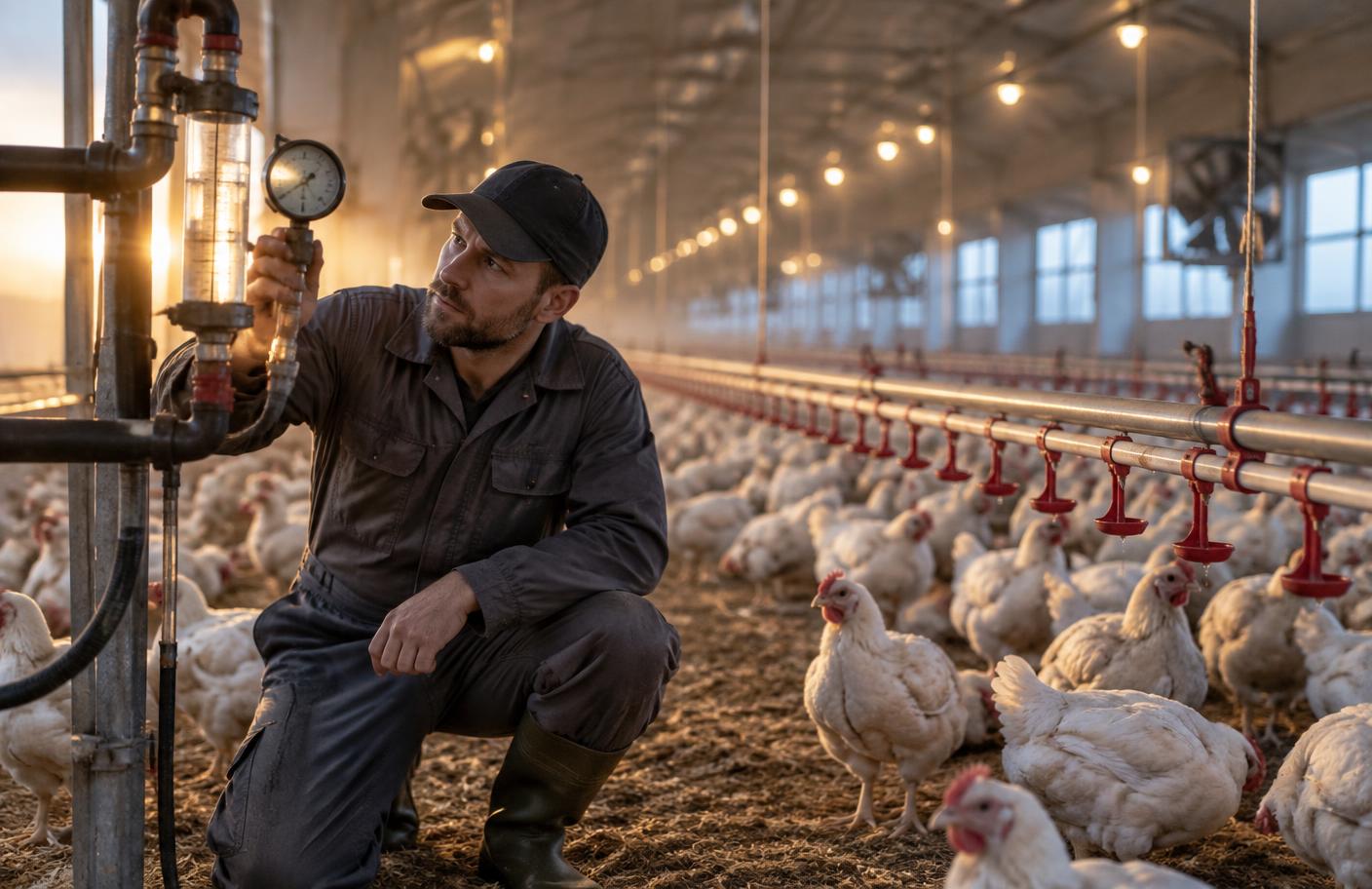
Water is immediate. Birds visit the line throughout the day, environmental heat changes demand quickly, and a restriction reaches the flock before the next feed delivery is weighed. That makes water one of the clearest operational signals in a broiler house—but only when the meter, the line and the daily context can be trusted.
Field principle
Record water at the same times each day. A change becomes useful when it can be compared with feed, temperature, bird age and the physical condition of the line.
Make the measurement believable
Start with the meter and the plumbing. Check that the meter advances at low flow, that bypasses are closed, and that leaks, flushing and cleaning water are not being mistaken for bird consumption. Record the unit and the reading time; a daily total taken at shifting hours produces a false trend.
At bird level, walk the whole line. Pressure that looks correct at the regulator can still leave the far end short. Look for wet litter beneath leaking nipples, dry areas around blocked sections, uneven bird distribution and lines that are too high or low for the flock.
Read ratios as relationships
Water-to-feed relationships can help separate a hot-day response from a broader intake problem, but there is no single ratio that diagnoses a flock. Diet composition, water minerals, medication, nipple type, humidity and age all move the relationship. Compare the flock with its own recent baseline before reaching for a universal target.
Plot the daily values rather than reading them in isolation. A gradual change may follow growth or weather; a sharp break after maintenance, feed delivery or medication asks a different question. The purpose of the ratio is to direct inspection, not to replace it.
Escalate the pattern, not a guess
A sudden fall in water use should prompt an immediate check of supply, pump, header tank, pressure, line height and access. A rise deserves checks for heat load, leaks, salt or mineral changes, feed disruption and flock behaviour. Record what changed and whether correcting it restored the pattern.
Water data cannot identify disease. If an intake change arrives with unusual droppings, marked depression, respiratory signs, neurological signs or rising mortality, contact a veterinarian or the relevant animal-health authority promptly. Preserve the readings because the timeline can still help the investigation.